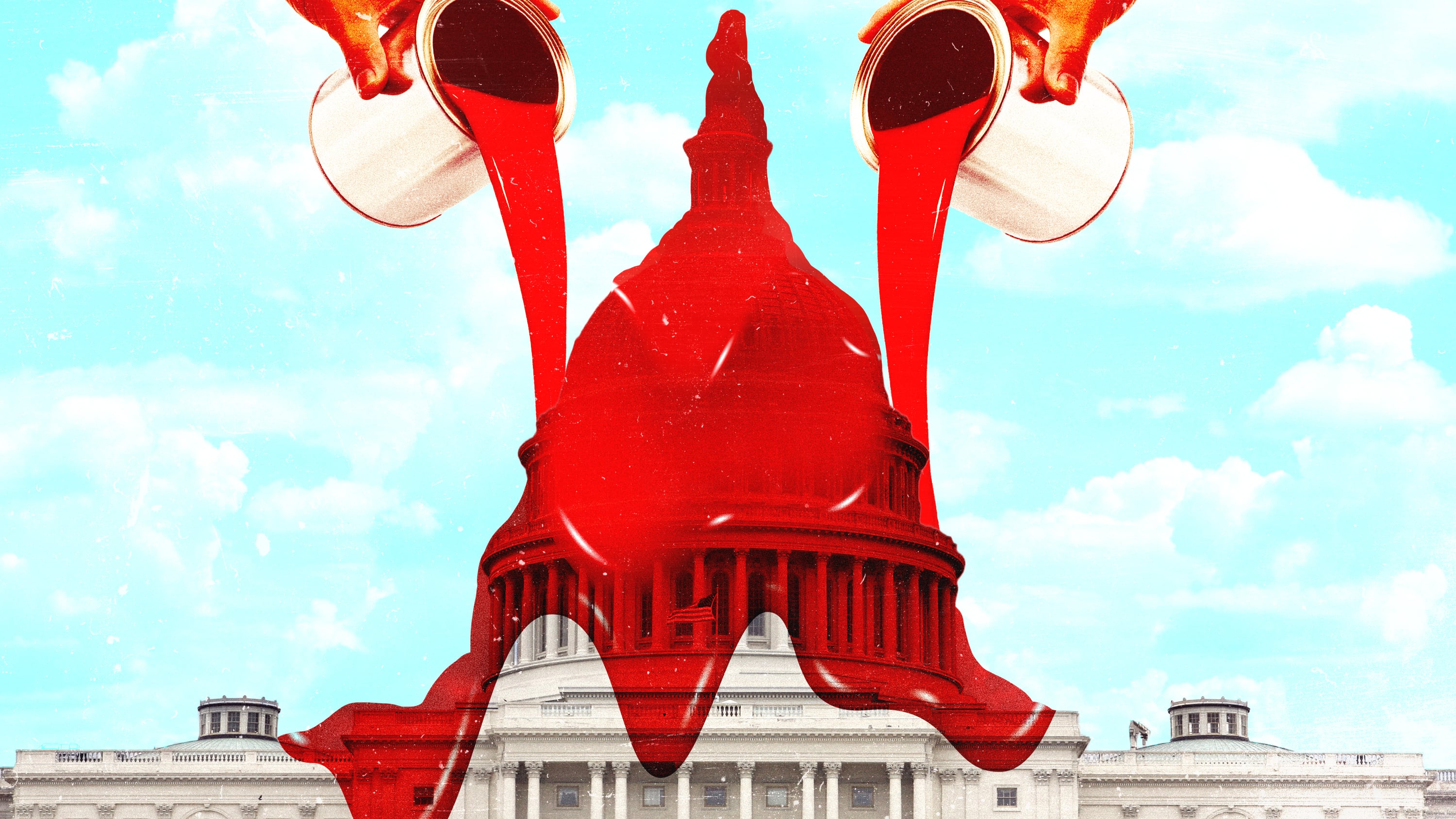
Supreme Court Case Could Reshape Congress for Decades
A recent Supreme Court case is generating buzz, and it could have major implications for the future of Congress. The conservative-leaning court appears to be considering limiting the use of race as a factor when drawing congressional districts. What does this mean? Well, it could potentially allow Republican-led states to redraw their districts in a way that favors the GOP, potentially solidifying their control of the House for years to come.

The case, Louisiana v. Callais, centers around Section 2 of the Voting Rights Act of 1965, a landmark piece of civil rights legislation. This section has historically been interpreted to require the creation of majority-minority districts to ensure fair representation. However, the Supreme Court has been gradually narrowing the scope of this provision over the past decade.
Think about it: a change to how these districts are drawn could have a HUGE impact. If the court significantly weakens or even strikes down Section 2, it could pave the way for Republicans to potentially eliminate or redraw over a dozen districts currently held by Democrats, particularly in the South. These are areas where previous gerrymandering efforts were limited by the Voting Rights Act.
In the House of Representatives, where Republicans currently hold a slim majority, even small shifts in seat allocation can dramatically change the balance of power. The House flipped from Democrat to Republican control as recently as 2022, showing just how sensitive this balance is. This case is about power and representation, and the consequences could be felt for years to come.
One analysis from The New York Times suggests that the end of Section 2 could result in Republicans gaining as many as 12 seats! That's a significant shift, and it would make it much harder for Democrats to regain control of the House.

The court heard arguments in the case, but a decision isn't expected until late June or early July. This makes it difficult to predict exactly when any potential changes to district maps would take effect. The midterm elections are in November, and the timeline for filing deadlines and primaries is already underway. It's a complex situation with many moving parts!
It's no surprise that both Democrats and Republicans are accusing each other of trying to manipulate the system to maintain power. The stakes are incredibly high, and the outcome of this case could have a profound impact on the future of American politics. This impacts not only congressional districts, but also voter rights.
The lawsuit itself was brought by a group of voters who argue that Louisiana's redrawn maps, which created a second majority-Black district, violate the 14th and 15th Amendments of the Constitution. Last year, the court declined to rule on the state's 2024 map, opting instead to rehear the arguments this term.

During the arguments, some of the conservative justices questioned whether there should be a time limit on using race as a factor in drawing congressional maps, arguing that such measures should not be "indefinite." Chief Justice John Roberts also questioned the appropriate role race should play in the process.
A lawyer representing Black voters countered that the current diversity in representation in the South is only because of litigation under the Voting Rights Act. This highlights the core of the debate: balancing the need to remedy past discrimination with the principle of equal treatment under the law.
Louisiana's situation is particularly interesting. The state redrew its maps in 2024 after a federal judge ruled that the original maps, drawn in 2022, diluted the voting power of Black voters. The census showed that a third of Louisiana's population is Black, yet the original map had only one majority-Black district. This case is a complex interplay of law, politics, and demographics, and the Supreme Court's decision will have a lasting impact.
Stay tuned for further updates as this important case progresses! We'll be here to break down the legal jargon and explain what it all means for you.
```